March 2, 2026
Taste as capital in the era of vibe research
Recent AI tools for research and coding truly feel like magic. They make it possible to code up fully functioning prototypes of analyses, modelling, websites, and full systems in minutes. For research, this is truly game-changing–we have an army of, at worst, extremely skilled undergrads, who can be orchestrated to perform various research tasks. People are starting to refer to this as “vibe research”: directing AI agents to generate analyses, prototypes, and hypotheses through high-level guidance rather than manual execution. The only problem? I never signed up for this!
I got into the business of doing research because of my love for reading, writing, coding, presenting (and not the love for orchestrating agents). The satisfaction of a first written out draft appearing on the screen. I’ve been increasingly feeling like agents undermine the parts of research that originally drew me to it, not because agents are better than me, but because not relying on them to read, write, code, or present is inefficient. Of course one can still produce all research output without any help from AI. The issue is that doing so is inefficient, and, as scientists embedded into existing systems, we’re incentivized against it.
Regardless, as scientists, we are in the business of understanding the world and understanding people. These tools will make us better at that. They can speed us up, make it possible to explore a greater number of threads simultaneously, make it possible to achieve much more in the span of one lifetime, or one career. For example, Darwin didn’t run every experiment. The contribution was the frame. If the questions we’re asking are good, that’s a real intellectual legacy, regardless of who ran the code. And arguably, if Darwin had a ten times greater army of extremely skilled undergrads, they would have been beneficial for this mission.
Either way, what is the role of the human researcher in this new disorienting reality of “vibe research”? How to reconcile this new reality with my original motivation–the love for the good old, fully human, coding, writing and thinking?
Instead of the orchestrator, the inspiring role for the human in this new reality: The tastemaker.
Whenever the idea of speeding up scientific discovery is brought up, I think to myself: Speed us up towards what?! That’s where the taste comes in. When generation becomes cheap, selection becomes the bottleneck. In that world, taste becomes a form of scientific capital. Perhaps the researcher will become more of an editor and less of a writer. Our taste is still the selection mechanism. We’re choosing what to ask, what to pursue, what to reject. That’s not nothing. Good editors aren’t less engaged with a book than its author. They’re engaged differently.
Acceleration is only valuable if someone knows where to point it. The field can move faster now, but faster in what direction? That’s not a question agents answer. As humans, we’re not being made redundant by the speed, we’re becoming more necessary as a navigator, precisely because the speed makes directionlessness more costly.
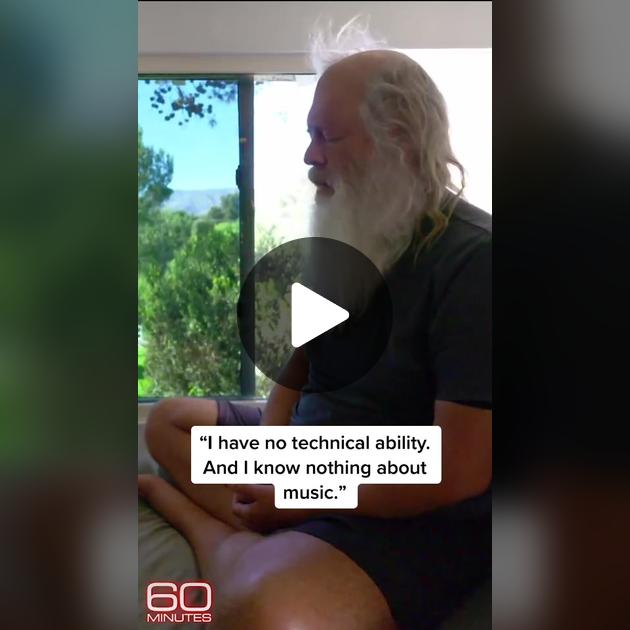
The increasingly crucial role of taste makes me think about the parallels with how music producer Rick Rubin describes his unique value, in a fascinating exchange with Anderson Cooper:
“Do you play instruments?” Cooper asks.
“Barely,” Rubin replies.
“Do you know how to work a sound board?”
“No,” Rubin replies, “I have no technical ability. And I know nothing about music.”
“Well, you must know something,” Cooper says.
“I know what I like and what I don’t like. I’m decisive about what I like and what I don’t like,” Rubin says.
“So what are you being paid for?”
“The confidence I have in my taste and my ability to express what I feel,” Rubin says.
Maybe a researcher will become somewhat like a tastemaker: an editor or a producer, not necessarily technically creating music day to day, but having recognizable taste.
Maybe the question is still whether I find that form of engagement satisfying, not whether it’s “real” work. But also–taste is usually cultivated through practice. Writers develop taste by writing, programmers by coding. If agents take over these activities, how will future researchers develop the taste that the new system requires?